


It’s 2:00 AM. Your eyes burn from staring at the screen. That stubborn error you promised to “fix later” is still there, mocking you. Your programming assignment due tomorrow is only half-working, and the deadline clock keeps ticking mercilessly. Sound familiar?
If you’re frantically searching for last-minute help, you’re not alone. Thousands of students face this exact crisis every semester. Take a deep breath. This guide will help you navigate the panic, avoid grade-killing mistakes, and find legitimate solutions before time runs out.

Why This Crisis Happens to Good Students
You’re not a bad student for ending up here. Programming assignments have unique challenges that make last-minute crunches common.
The Time Estimation Trap
Coding tasks always take longer than expected. A “simple” function spirals into hours of debugging. That edge-case bug appears only at 1 AM when your brain is foggy. When panic sets in, your problem-solving ability drops – you make mistakes you’d normally catch instantly.
Murphy’s Law of Programming
Surprises surface right before deadlines. A library won’t work on lab computers. An algorithm that seemed fine on paper runs impossibly slow. These “gotchas” are programming’s cruel reality.
The Perfect Storm of Deadlines
You’re juggling multiple submissions. Maybe you had a math quiz, an English essay, and a lab report all due this week. Add part-time work and staying afloat in other classes, and it’s easy to see why things slip.
The pressure for perfect grades can paradoxically lead to procrastination. Now, with your programming assignment due tomorrow, survival trumps perfection.
Common Last-Minute Mistakes That Destroy Grades
Panic makes students desperate. Avoid these grade-killing errors:
Copy-Pasting Random Code
Grabbing code from GitHub or StackOverflow at 3 AM is tempting. But blindly pasting code you don’t understand creates new bugs. Even worse, it could be plagiarized. Professors use tools like MOSS (Measure of Software Similarity) that detect copied code even with variable name changes.
Submitting Half-Working Programs
Some students think “something is better than nothing” and submit code that crashes on certain inputs. Reality check: if core functionality doesn’t work, auto-graders might give little to no points. Never assume you’ll get full marks for incomplete solutions.
Ignoring Assignment Instructions
In the rush, students skip details like required output format, coding style rules, or documentation. Missing a simple README requirement can tank your grade even if the code is perfect.

“Camouflaging” Plagiarism
Renaming variables or reordering functions in copied code won’t fool plagiarism detection. Modern tools compare code structure and logic, not just names. Students who try this at 4 AM usually get caught – leading to zero on the assignment or academic misconduct charges.
Uploading Wrong Files
Under stress, mistakes happen easily. You might zip the wrong folder, upload an older version, or forget crucial files. Always double-check before submitting. It takes one minute and can save your grade.
Real Student Crisis Scenarios
These situations happen every night in dorms across the country:
The Python Beginner at Midnight
Jake, a first-year CS student, started his Python assignment in the evening. By midnight, he hit a logic bug he can’t solve. He’s googling error messages and copy-pasting StackOverflow snippets that introduce new issues. It’s 2:00 AM, the assignment is due at 8:00 AM, and he’s thinking about just turning in whatever he has.
The Confused International Student
Mei is tackling Java homework due tomorrow. English isn’t her first language, and she misunderstood a key requirement about input/output format. After hours of coding, she realizes her program might be solving the wrong problem. She’s torn between rewriting large sections or hoping for partial credit.
The Senior with Everything on the Line
Alex needs to pass this core software engineering class to graduate. He had every intention of starting earlier, but juggling work and coursework got in the way. Now it’s 3 AM, the project is 30% done, and the fear of failing paralyzes him. He’s watching precious minutes slip by.
See yourself in these scenarios? You’re not alone. The difference between success and failure often comes down to the next steps you take.
What You Can Realistically Fix Before Tomorrow
With the deadline approaching, you need honest prioritization. Here’s what’s possible:
You CAN Fix:
- Small bugs and syntax errors – Missing semicolons, misspelled variables, or off-by-one errors. A program that runs imperfectly beats one that doesn’t run at all.
- One messy section – If you have time, clean up and add comments to improve clarity. Don’t refactor everything; focus on preventing crashes.
- Easy documentation points – Add required header comments, ensure correct file naming, and include any requested screenshots or README files.
You CANNOT Fix:
- Entire missing features – If you haven’t started a major portion, you’re unlikely to complete it correctly in hours. Focus on core requirements that carry the most points.
- Complex logic problems on no sleep – Your exhausted brain won’t crack tricky algorithms. Document your approach in comments to show understanding.
- Everything at once – Rushing can break working code. Sometimes a simpler version that works beats an ambitious attempt that fails.
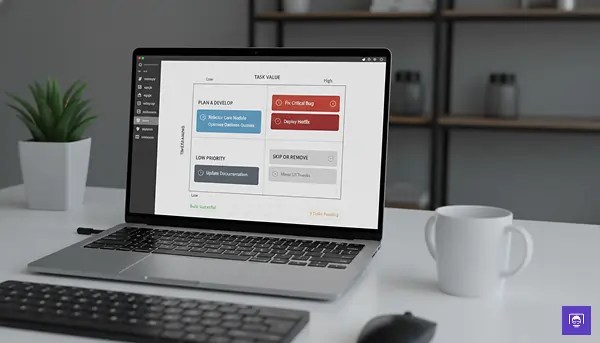
Prioritize for Maximum Points
Skim the rubric right now. Determine which parts are essential. Usually, assignments allocate more points to core functionality: does it run, does it handle main cases? Make sure those are as good as you can get them. Lesser items like perfect code styling might be okay to sacrifice if it means the main program works.
This is triage. Save your grade by treating the most critical issues first.
Plagiarism Warning: Don’t Ruin Your Semester
When your programming assignment is due tomorrow, desperate thoughts emerge: “Maybe I can copy my friend’s code” or “That GitHub repo looks similar.” Stop.
Universities Detect Everything
Professors use sophisticated plagiarism detection software like MOSS. These tools automatically compare every submission for similarities. They can even compare against code from previous semesters or common online sources. Changing variable names won’t save you.
Why Copy-Pasting Fails
Beyond detection software, copied code rarely integrates well. Different coding styles, variable conventions, or algorithm versions create inconsistencies professors notice. A sudden change in your coding style is a red flag.
The Consequences Aren’t Worth It
Best-case scenario: zero on the assignment. Worst-case: course failure or suspension. One low grade won’t ruin your life, but an academic misconduct record can haunt your entire semester.
What Ethical Help Looks Like
Needing help is okay. Asking for hints on concepts, using approved resources, or getting tutoring is different from plagiarism. Many schools encourage peer discussion or tutoring, as long as the final code you write is yours. For instance, getting guided help with coding assignments to understand your errors is learning – submitting someone else’s work as yours is cheating.
When to Stop Trying Alone
How do you know it’s time to seek help? Watch for these signs:
- You’ve been stuck for hours – If you’ve made no progress in several hours on a critical bug, your time might be better spent getting external input.
- Errors are looping – Fixing one thing breaks another in a cycle. This indicates a deeper issue where guidance could save time.
- Deadline is dangerously close and clarity is gone – Maybe there are 5 hours left and you’re frozen. When your brain can’t focus and time is nearly up, an outside perspective can be a lifesaver.
- Physical and mental exhaustion – Running on fumes degrades your work quality. Sometimes getting someone to assist is more effective than slogging through in zombie-mode.
- The stakes are high – If this assignment is make-or-break for your course grade or academic standing, recognizing you need help is smart strategy, not weakness.
Professionals collaborate and debug together all the time. There’s no shame in asking for help – it’s about getting the job done right.
The Safe Way to Get Last-Minute Help
You need concrete help right now. Many students in your situation turn to expert programming assistance services.
Why Consider Expert Services?
An experienced programming tutor can quickly pinpoint what’s wrong – something that might take you 5 more frantic hours. For a reasonable fee, you “borrow” an expert’s brain to get unstuck. When your programming assignment is due tomorrow, this can be the difference between submission and failure.
Plagiarism-Safe Support
Services like AssignmentDude.com provide original, customized help. You’re not getting copy-paste from a repository – you’re getting code written for your specific assignment that passes plagiarism checks. Think of it as having a knowledgeable mentor available 24/7.
Deadline-Focused Assistance
Last-minute help only works if it meets your deadline. Professional services understand urgency. AssignmentDude.com has vetted programmers who can start work immediately, even at 2 AM. Whether your deadline is 24 hours or 8 hours away, they can often deliver on time. You’re getting a lifeline while you’re sinking.

Confidential and Student-Friendly
A common concern: “Is this allowed?” Services operate confidentially – your university doesn’t get notified. The idea is that you’re getting tutoring assistance. You can request well-commented solutions to learn how it works, or even ask experts to walk you through the code. Think of it as collaborating with a pro. AssignmentDude.com has built trust by being transparent and understanding academic guidelines.
Expertise in Your Subject
You’ll get someone who knows your exact programming language or framework. Stuck on a Python bug? They have Python specialists. Struggling with a database project? They have database experts. They’re familiar with USA/UK curricula and common assignment styles – they’ve likely seen assignments similar to yours before. This familiarity means they can quickly understand requirements and typical auto-grader pitfalls.
Not Just a Quick Fix – A Learning Opportunity
The best services aren’t about “doing homework for you.” They’re about helping you learn and succeed. When AssignmentDude.com delivers a solution, it comes with explanations or comments so you can study how it works. By reviewing the expert’s solution, you learn how to approach the problem next time. Some students use guided help as mentorship – comparing the expert’s solution with their attempt to see where they went wrong.
Guided programming assistance is the safest shortcut when used responsibly. It’s like having a senior developer on call. Services like AssignmentDude.com exist because students sometimes need that rescue in a way that’s honest and plagiarism-free.
Your 24-Hour Emergency Action Plan
Let’s get practical. Here’s what to do right now:
Step 1: Step Back and Breathe (5 minutes)
Stop coding. Stand up, stretch, drink water. Your brain needs a reset. Panicking clouds thinking. Take a few deep breaths. Remind yourself that you can get through this – many have before.
Step 2: Assess Your Status (10 minutes)
Quickly take stock. Jot down: “Part A = working, Part B = half-done, Part C = not started.” Check the assignment requirements. This assessment takes minutes but gives you a crucial roadmap. It stops the feeling of “everything is a mess” and helps pinpoint biggest gaps.
Step 3: Prioritize the Essentials (5 minutes)
Look at your status and the deadline. Decide what the most critical thing to tackle next is. Is there a bug that, if fixed, will make the program functional? Is there an entire section worth lots of points? Choose one high-impact area. You can’t do everything at once – pick what will improve your assignment most.
Step 4: Work in Focused Bursts
Dive in and address the top priority with full focus. Code intensely for 30 minutes, then take a 5-minute break. This prevents burnout. During breaks, don’t scroll social media. Instead, stand up, breathe, then get back to it. Even in a time crunch, tiny mental breaks boost effectiveness.
Step 5: Use Resources Wisely
If stuck on something specific, use resources smartly. Check the course forum for hints. Google the error message – a quick search can sometimes yield a solution in minutes. Look up syntax or known bug fixes. Don’t copy large code chunks, but learning from documentation is fair game.
Step 6: Reach Out for Help (if needed)
If you’re not making enough progress fast enough, don’t wait. Send a message to a coding-savvy friend. Post a concise question on StackOverflow. Or contact a professional service like AssignmentDude.com for urgent assistance. The key is asking early enough that you can incorporate the help. Don’t wait until 30 minutes before the deadline.

Step 7: Polish Submission Details
As the deadline nears, allocate time to finalize “easy points.” Ensure your code file is named correctly. Gather any additional materials: screenshots of output, a README file, comments at the top of your code. Remove debugging print statements or commented-out junk code. A clean, well-presented submission makes a better impression.
Step 8: Submit on Time, No Matter What
Even if your program is only partially working, submit what you have before the deadline. A 50% assignment on time will almost always score higher than a perfect solution submitted late. Make sure you upload files correctly and verify the upload. Give yourself a buffer for the submission process – if it’s due at 11:59, aim for 11:50.
Step 9: Rest and Reflect
Once you hit submit, get some rest. You’ve done what you could. Later, when rested, reflect: How can you prevent this panic next time? Maybe start assignments earlier, or seek help before the last minute. Every student has a rough night like this – what matters is learning from it.
Step 10: Be Kind to Yourself
Feeling guilty won’t change the past. College is a learning curve in time management as much as content. You hit a bump, but you’re actively dealing with it. That shows determination. No matter the outcome, this experience can strengthen you. You’ve learned that there are always options, and next time you’ll remember this and perhaps seek help sooner.
Frequently Asked Questions
Don’t panic. Assess how much you’ve completed and what’s left. Prioritize critical parts that you can realistically finish before the deadline. Ensure the code runs and main features work. If completely stuck, consider seeking help from classmates, forums, or professional services. Submit something on time rather than nothing – even incomplete work can earn partial credit.
Yes. Ethical help includes asking questions on forums like StackOverflow, getting hints from classmates, or using tutoring services like AssignmentDude.com that provide guided assistance. The key is that work you submit should be understood by you and not a direct copy. Avoid services that promise to just write your assignment without any learning.
First, breathe. Panic makes things worse. Make a list of what’s done versus not done. Identify one or two high-priority tasks and tackle those first. Work in focused 30-minute bursts with 5-minute breaks. Use available resources like course notes or quick Google searches. If totally stuck, ask for help immediately – don’t wait. Leave time to properly submit your work.
Copying online code is risky. Professors use plagiarism detection tools like MOSS that compare your code with others and online sources. Even with variable name changes, you could get flagged for academic dishonesty. Copied code might not solve your exact problem or could introduce new bugs. If caught, consequences range from zero on the assignment to course failure or suspension.
It depends on how you use that help. Paying someone to do the entire assignment and submitting it as your own is cheating. However, hiring a tutor or service like AssignmentDude.com to guide you, explain concepts, or provide a reference solution for learning is ethical. The expectation is you’ll learn from the help. Always ensure the service provides original work and use it within your school’s honor code.
Start assignments earlier by breaking them into smaller tasks. Set personal deadlines a day or two before the actual deadline for a buffer. Budget more time for debugging than you think you’ll need. Don’t be shy about using resources early – if stuck on Day 2, ask for help on Day 2, not Day 7. Look ahead at your week’s workload and plan small progress on each assignment rather than neglecting one completely.
Final Thoughts: You’re Going to Be Okay
Staring at that screen at 2 AM with your programming assignment due tomorrow is terrifying. But you’ve made it this far, and you’re actively seeking solutions. That determination matters.
Remember: one assignment doesn’t define you. Even if it doesn’t go perfectly, you’ll survive and learn. Next time, you’ll start earlier or ask for help sooner. You now know there are always options – from smart prioritization to legitimate expert assistance.
Take the action steps outlined here. Make the most of the time you have left. And when you hit that submit button, regardless of the outcome, give yourself credit for pushing through a tough situation.
You’ve got this. Now take a deep breath and get back to work. Your future self will thank you for not giving up.
